Micron Technology reports fiscal third-quarter 2026 earnings Wednesday after market close, with analysts expecting roughly $35 billion in revenue that would make it the chip maker's most profitable quarter in its 47-year history.
The Street's consensus estimate — approximately $35 billion in revenue and an adjusted EPS of $20.57 — represents a roughly $1.5 billion beat over Micron's own official guidance. Even more striking, a sequential jump from $23.86 billion in Q2 to that figure would be one of the fastest single-quarter revenue accelerations ever recorded by a large-cap semiconductor company. The numbers reflect how thoroughly the AI buildout has restructured the memory industry's economics.
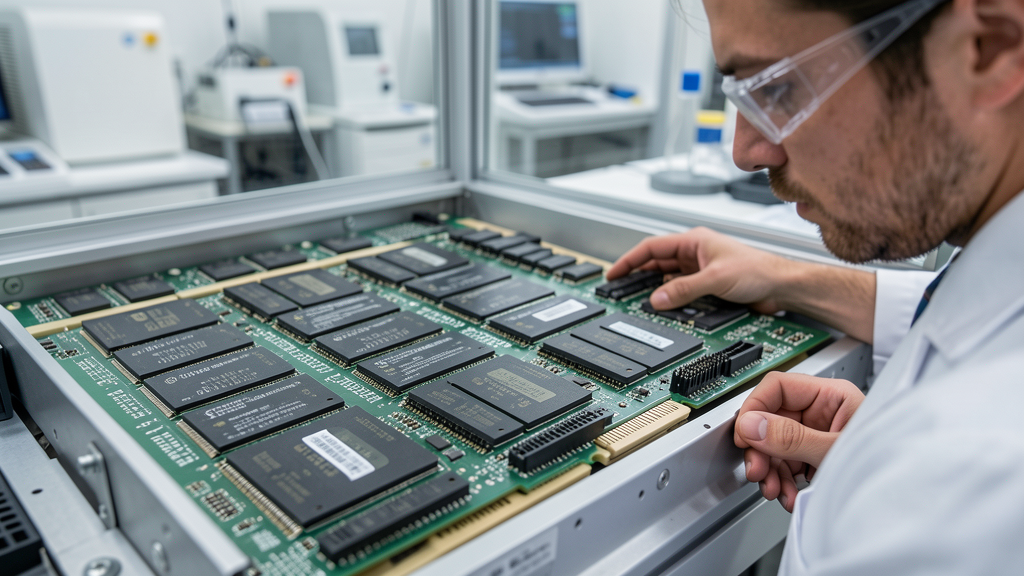
At the center of investor attention is Micron's high-bandwidth memory or HBM — the stacked DRAM product soldered onto the most advanced AI accelerators including Nvidia's H200 GB200 and next-generation Blackwell Ultra chips. Micron crossed $1 billion in HBM revenue for the first time in Q2 FY2026. The question heading into Wednesday's print is whether the company can show that figure growing not merely holding. HBM market share data, pricing stability commentary, and forward supply guidance all rate as critical signals.
Micron's strategic relationship with AI research labs has become a defining feature of its commercial narrative. On June 22, the company announced a multi-year supply agreement with AI lab Anthropic that covers Micron's full data-center memory and storage portfolio, alongside a strategic investment in Anthropic's forthcoming Series H funding round. Anthropic's chief compute officer said the partnership reflects how central memory architecture has become to efficiently training and serving large models — a signal that hyperscalers view memory suppliers as strategic constraints rather than standard vendor relationships.
The analyst community has absorbed that narrative aggressively. Price targets issued in the month before earnings have doubled or tripled across the board: TD Cowen raised its target from $660 to $1,500, Wedbush to $1,300, and UBS to $1,625. A common thread links these revisions: memory's role in AI is structural not cyclical, driven by rising DRAM content per AI server, continued tightness in HBM supply, and pricing power that most analysts underestimated just six months ago.
Morningstar projects Micron's calendar-year net income will rank second only to Nvidia across the entire PHLX Semiconductor Index, framing the company — long viewed as a cyclical commodity player — as a durable AI infrastructure name. Whether the market confirms that reframe depends heavily on the Q4 outlook Micron provides. A forward revenue guidance above the current $38 billion to $40 billion consensus would likely extend the stock's momentum; anything softer on HBM pricing trajectory would create negative spillover across the AI semiconductor trade.
The bearish case remains visible. Broadcom's guidance miss on Tuesday reignited questions about how granularly hyperscalers are managing capex budgets, and a cautious read on future HBM demand from Micron would confirm the worst fears of investors who believe the AI trade is pricing in decades of future growth in today's valuations.
Still, the setup heading into Wednesday's report is unusually strong. Micron trades at roughly 18 times forward earnings, a discount to the broader tech sector, and institutional ownership has increased throughout the quarter. The report is less a test of whether the AI memory demand story is real — an argument that has largely been settled — and more a test of how long that demand can sustain the pace of growth the market has priced in.
Image source: v3b.fal.media