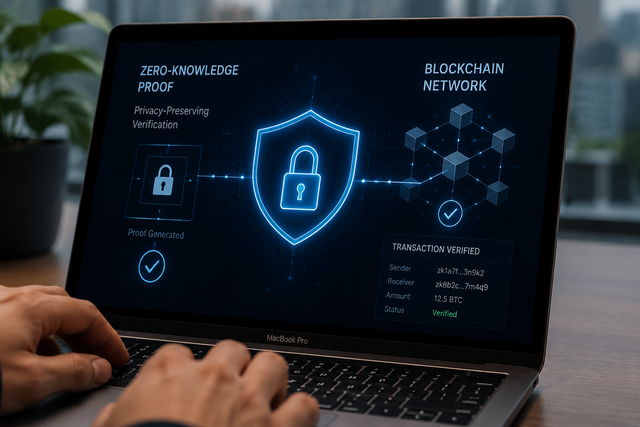
Zcash, the privacy-focused cryptocurrency that uses zero-knowledge proofs to shield transaction details, has surged more than 17% over the past week as growing concerns about financial surveillance and regulatory overreach drive renewed interest in privacy-preserving technologies. The token was trading at $463.79 on Tuesday, up from $396 a week ago, with its market capitalization climbing above $7.7 billion.
The rally has been driven by a combination of technical and fundamental factors. On the technical side, Zcash broke through a key resistance level at $420 that had capped its price for several weeks, triggering a wave of short covering and momentum buying. On the fundamental side, a series of regulatory developments across multiple jurisdictions has reignited debate about the right to financial privacy in the digital age.
Zcash was created in 2016 by scientists at MIT and Johns Hopkins University, using a fork of the original Bitcoin code base. Its distinguishing feature is the use of zk-SNARKs (zero-knowledge succinct non-interactive arguments of knowledge), a cryptographic technique that allows transactions to be verified without revealing the sender, receiver, or amount. Unlike Monero, which enables privacy by default, Zcash makes the feature optional — users can choose between transparent and shielded transactions.
Roughly 20% to 25% of circulating ZEC is currently held in encrypted shielded addresses, and about 30% of transactions use the privacy feature, according to CoinDesk Research. Those numbers have been steadily climbing as the Zcash development community has worked to make shielded transactions easier and cheaper to use.
"There's a growing recognition that financial privacy is not about hiding illicit activity — it's about basic civil liberties," said Zooko Wilcox, one of Zcash's original creators and the founder of the Electric Coin Company, which supports Zcash development. "As governments expand their surveillance capabilities, the demand for tools that protect ordinary people's financial information will only grow."
The privacy coin sector has faced significant headwinds in recent years. Multiple exchanges, including Binance and OKX, have delisted Monero and other privacy coins in response to regulatory pressure from European and Asian authorities. Zcash has largely avoided similar delistings because its optional privacy model allows exchanges to comply with anti-money laundering requirements by processing only transparent transactions.
That distinction has become increasingly important. While Monero's market capitalization has stagnated, Zcash has more than tripled over the past year. Institutional interest has also grown, with several crypto-focused investment vehicles now offering Zcash exposure to accredited investors.
The token shares Bitcoin's maximum supply of 21 million coins, a feature that appeals to investors who value digital scarcity. With approximately 16.7 million ZEC already in circulation, the remaining supply is constrained, adding a supply-side dynamic to the rally.
The broader market for privacy-preserving technologies extends well beyond cryptocurrency. Zero-knowledge proofs are being explored for applications in identity verification, supply chain management, and confidential business transactions. Zcash's development team has been at the forefront of advancing the underlying cryptography, and several of its innovations have been adopted by other blockchain projects.
As of Tuesday, ZEC's 24-hour trading volume stood at approximately $380 million, a significant increase from the $150 million daily average seen in May. The token was the 10th largest cryptocurrency by market capitalization, according to CoinMarketCap data.
Image source: i.ibb.co