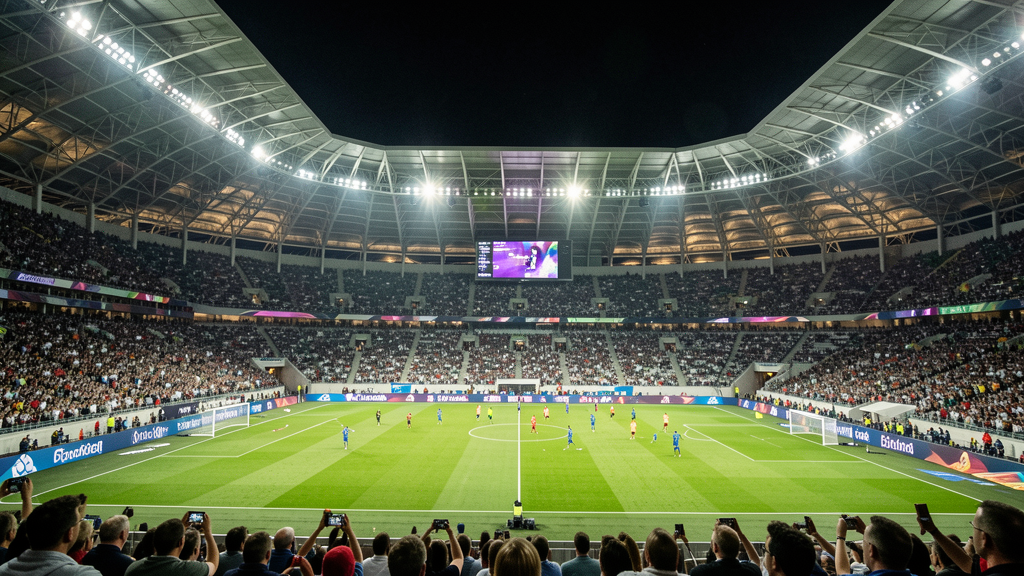
Artificial intelligence is moving from general forecasting to specialized tournament prediction, and the FIFA World Cup 2026 is becoming the proving ground for a new generation of match-prediction tools.
MossAI has released an AI-powered prediction agent for the upcoming World Cup, claiming accuracy above 80 percent using a 9-factor framework that spans squad quality, recent form, injury reports, venue conditions, expected goals, individual player statistics, head-to-head history, and additional performance metrics. The model assigns each team a power index and produces match-by-match probabilities rather than simply picking a tournament winner.
The approach reflects a broader shift in sports analytics. Supercomputer models from Opta and other data firms have long produced pre-tournament forecasts, but MossAI differentiates itself by combining real-time odds-market data with its own proprietary metrics. The platform displays live probability comparisons against Polymarket betting odds and locks premium predictions behind an unlock mechanism, suggesting it intends to operate at the intersection of consumer prediction and sports-tech monetization.
Whether 80 percent accuracy is achievable across 104 matches in a 48-team format remains to be seen. Previous tournament models from major analytics outlets have correctly called winners in roughly six of ten matches, but a full tournament bracket is a far more difficult problem than single-match classification. The presence of injury variables, red cards, and penalty shootouts introduces randomness that no statistical model can fully eliminate.
What the MossAI launch does demonstrate is that AI-driven sports forecasting is moving from novelty to a structured product category. For casual fans, these tools offer a more rigorous alternative to gut picks. For the broader AI industry, sports prediction represents a visible, testable use case that can drive consumer adoption and showcase the practical limits of machine-learned forecasting in high-uncertainty environments.
Image source: i.ibb.co