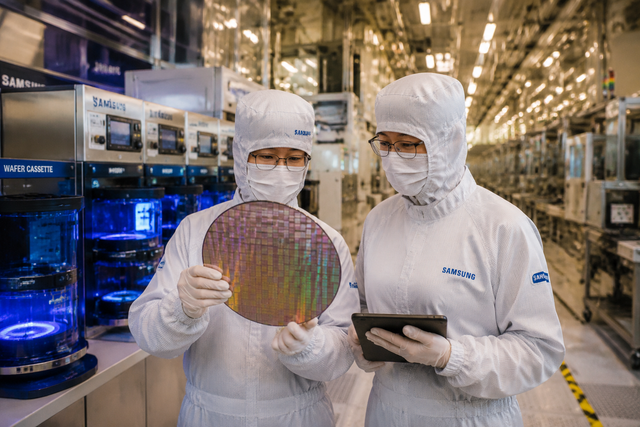
Samsung Electronics posted a staggering 1,800% jump in second-quarter operating profit, riding the global wave of AI infrastructure spending. Yet the numbers weren't enough to calm investor nerves, as chip stocks tumbled across the board on concerns that the AI spending cycle may be approaching unsustainable levels.
The South Korean tech giant reported preliminary quarterly operating profit of approximately 15.1 trillion won ($11.1 billion), a figure that would have seemed fantastical just two years ago. The surge was driven almost entirely by explosive demand for high-bandwidth memory chips, the kind used in Nvidia's AI accelerators and data center servers powering the current generative AI boom.
Samsung's stock has risen more than 430% over the past year, and rival SK Hynix has gained roughly 230%, as the two companies became the primary suppliers of the HBM (High Bandwidth Memory) chips that underpin nearly every major AI training cluster in operation today. Together, the two South Korean firms control the vast majority of the world's HBM supply.
But investors appeared to adopt a "sell the news" posture on Monday. Intel shares fell nearly 10%, Astera Labs dropped 11.5%, and Marvell Technology declined 7.5%. The Philadelphia Semiconductor Index fell more than 3%, its worst single-session decline in weeks. Analysts noted that while Samsung's results were strong, they fell slightly short of the most aggressive buy-side expectations that had built up during the stock's parabolic run.
"The market had priced in perfection and got something close to it — which wasn't enough," said one Seoul-based fund manager who asked not to be named. "When a stock is up 430%, even a small miss on margin trajectory can trigger a selloff."
The broader concern, however, extends beyond Samsung's quarterly numbers. Investors are beginning to question whether the hundreds of billions of dollars being poured into AI data centers by companies like Microsoft, Google, Amazon, and Meta will generate proportional returns. Microsoft alone has announced plans to spend over $80 billion on AI infrastructure in fiscal 2026, while Meta recently raised its capital expenditure forecast to as much as $72 billion.
Some analysts have drawn parallels to the telecom spending cycle of the late 1990s, when massive fiber optic buildouts ultimately led to a glut that crushed equipment makers for years. The AI bulls counter that unlike telecom, AI demand is growing faster than supply, and that the technology is already being integrated into revenue-generating products across enterprise software, healthcare, and financial services.
For Samsung, the immediate outlook remains robust. The company is ramping production of its latest HBM3E chips and has reportedly secured supply agreements with Nvidia through 2027. But with geopolitical tensions also rising — including U.S. restrictions on AI chip exports to China — the path forward is anything but smooth.
The Nasdaq Composite fell 1% on the day, dropping below its recent highs, while the Dow Jones Industrial Average slipped below 53,000. Whether Monday's selloff marks a turning point or a brief pause in the AI rally remains the central question for markets heading into the second half of 2026.
Image source: i.ibb.co