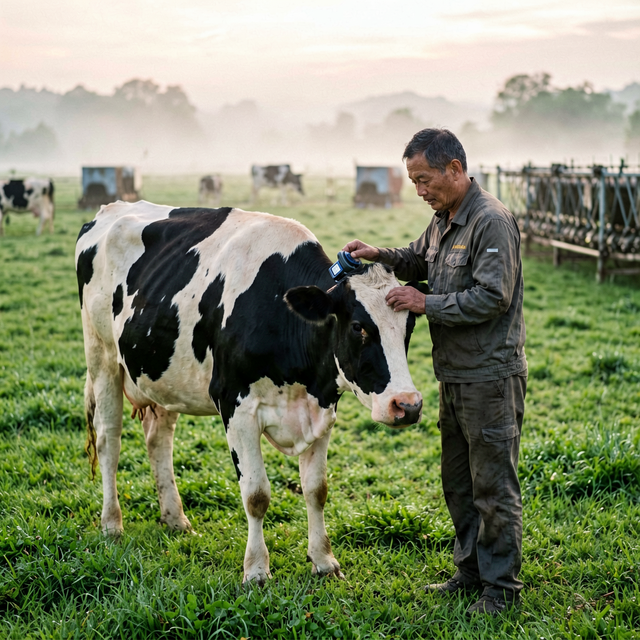
In a rural corner of Brazil’s dairy belt, farmers are collateralizing living animals on the blockchain, using smart collars that monitor herd health in real time to satisfy lenders who would otherwise reject their loan applications.
A growing number of Brazilian agricultural businesses have begun tokenizing dairy cows as digital assets on decentralized finance platforms, allowing them to access credit without navigating the strict collateral requirements and lending ceilings imposed by traditional banks. The practice, which has already facilitated thousands of dollars in loans for small and medium-sized farms, represents one of the more unconventional convergences of agriculture and blockchain technology.
Each participating cow is fitted with a smart collar that transmits health data to an on-chain registry, including movement patterns, temperature, and feeding behavior. This continuous monitoring serves two purposes: it verifies that the animal is alive and healthy, and it creates an immutable record that lenders can audit before extending credit. If a cow’s vital signs indicate distress or mortality, the corresponding token is automatically flagged, triggering collateral revaluation or liquidation.
The model addresses a structural problem in Brazilian agricultural finance. Commercial banks in the country often cap lending to small rural producers at levels insufficient to cover feed, equipment, and operational costs. By tokenizing livestock and borrowing against those digital assets on decentralized platforms, farmers can effectively bypass those constraints, albeit at higher interest rates than conventional loans.
Regulators in Brasilia have taken note. The Central Bank of Brazil has signaled interest in creating a sandbox framework for agricultural tokenization, though officials have warned that consumer protection standards and anti-money laundering checks must be built into any licensed platform. For now, the tokenized cow loans operate in a legal gray zone, relying on smart contracts rather than formal credit agreements.
The experiment has drawn attention from development finance institutions and agricultural technology investors who see potential for replication in other emerging markets where rural credit gaps are acute. Whether the model can scale beyond boutique pilot programs remains an open question, but for the farmers currently using it, the blockchain has already delivered something their banks would not: access to capital.
Image source: i.ibb.co