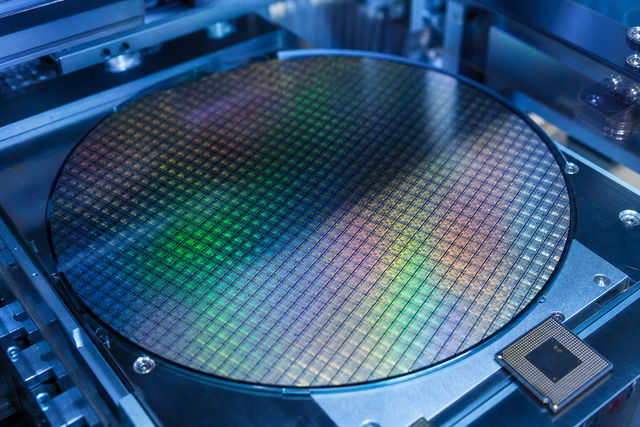
Meta Platforms plans to begin production of a custom artificial intelligence chip in September, a move designed to roughly double the company’s computing capacity and reduce its dependence on outside semiconductor suppliers, according to people familiar with the plans.
The chip, developed inside Meta’s hardware group, is intended to power the company’s recommendation systems and generative AI workloads across its family of apps, which serve billions of users. Production is expected to bring online as much as 14 gigawatts of associated data-center capacity next year, a scale that would rank among the largest private computing buildouts in the industry.
The effort reflects a broader scramble among the largest technology companies to secure specialized silicon. Training and serving advanced models demands vast fleets of accelerators, and supply from leading vendors has been constrained and expensive, pushing platforms to take silicon design into their own hands.
By designing its own processors, Meta aims to trim the steep inference costs that come with running AI features at planetary scale. The company has repeatedly signaled that AI infrastructure will be its largest capital priority for the foreseeable future, with spending plans that have drawn scrutiny from investors watching margins.
Rivals including Google, Amazon and Microsoft have pursued similar strategies, building custom chips to complement purchased graphics processing units. The trend is reshaping the semiconductor market and intensifying competition with Nvidia, whose accelerators remain the industry standard for training frontier models.
Analysts say the September target is ambitious and could slip, given the complexity of taping out and validating new silicon at volume. But the direction is unambiguous: the world’s largest platforms are no longer content to rent or buy all of their AI horsepower, and the race for in-house compute is now central to their strategies.
Image source: i.ibb.co