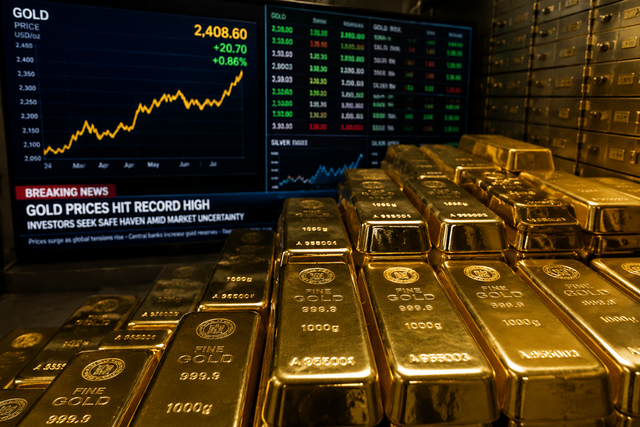
Gold surged past $5,100 per ounce this week, setting a new all-time record as a confluence of geopolitical tensions, slowing global growth, and falling interest rates drove investors into the metal's traditional safe haven. The rally marks an 87% gain since the start of the current conflict cycle and has reignited debate about whether gold's role as a portfolio hedge has never been more important — or more dangerous at these levels.
The precious metal hit $5,127 per troy ounce in early Asian trading on Monday before pulling back slightly to settle around $5,080 by the close of London business. The move extended a rally that has seen gold climb from approximately $2,750 at the start of 2025, making it one of the best-performing major assets of the past 18 months.
Silver followed suit, breaking above $100 per ounce for the first time since 1980, when the Hunt brothers attempted to corner the market. The white metal has gained more than 40% this year alone, driven by a combination of investment demand and increasing industrial usage in solar panel manufacturing.
The immediate catalyst for the latest leg higher was a weaker-than-expected U.S. jobs report released on Friday, which showed payrolls growing by just 125,000 in June — well below the 200,000 economists had forecast. The data reinforced expectations that the Federal Reserve will cut interest rates at its September meeting, a move that reduces the opportunity cost of holding non-yielding assets like gold.
"Gold is doing exactly what it's supposed to do in this environment," said Jan Nieuwenhuijs, a precious metals analyst at Gainesville Coins. "You have slowing growth, falling real rates, persistent geopolitical risk, and central banks buying at record levels. Every one of those factors is bullish."
Central bank purchases have been a key structural driver of the rally. According to the World Gold Council, central banks collectively bought 1,136 tonnes of gold in 2025, the third consecutive year of net purchases exceeding 1,000 tonnes. China, Poland, India, and Turkey have been the most aggressive buyers, as emerging market central banks seek to reduce their dependence on U.S. dollar reserves amid ongoing geopolitical fragmentation.
Retail demand has also surged. Sales of gold coins and bars in North America and Europe rose 35% year-over-year in the second quarter, according to preliminary industry data. Exchange-traded gold funds have seen net inflows for 14 consecutive weeks, with the SPDR Gold Shares ETF (GLD) now holding more than 900 tonnes of the metal.
Not everyone is convinced the rally has further to run. Some analysts warn that gold is now significantly overvalued relative to historical norms and that a resolution of any major geopolitical conflict — or a surprise hawkish turn by the Fed — could trigger a sharp correction. "When taxi drivers start talking about gold, it's usually time to be cautious," said one London-based fund manager.
For now, however, the momentum remains firmly to the upside. Gold futures for August delivery were last trading at $5,092 per ounce on the Comex division of the New York Mercantile Exchange, up 1.8% on the day.
Image source: i.ibb.co