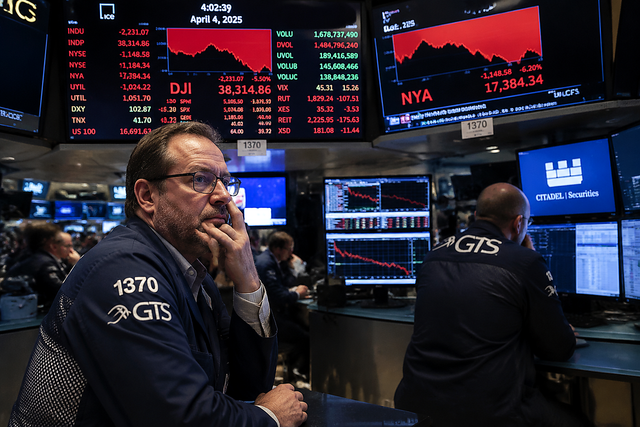
Quantitative hedge funds suffered their worst performance in nearly a year during the first week of July, as a sharp selloff in artificial intelligence stocks disrupted the momentum-driven strategies that had powered outsized returns throughout the first half of 2026.
The drawdown hit systematic funds that had built concentrated positions in AI-related equities, a trade that had seemed unassailable for months. Shares of companies across the AI supply chain — from chipmakers to cloud providers to application-layer startups — declined in tandem as investors reassessed the pace of return on massive infrastructure investments. The Nasdaq Composite fell 1.6 percent in its worst session in three weeks, with semiconductor stocks bearing the brunt of the selling.
The pain was particularly acute for algorithmic strategies that rely on momentum signals to identify and ride winning trades. Many of these funds had increased their exposure to AI stocks as the sector climbed, a strategy that amplified gains on the way up but magnified losses when the reversal came. Several prominent quant shops reported drawdowns of between 3 and 5 percent for the week, according to people familiar with the returns.
"When momentum unwinds, it unwinds fast," said one portfolio manager at a large systematic hedge fund who spoke on condition of anonymity. "Everyone was positioned the same way, and when the selling started, there was no one on the other side."
The selloff was triggered in part by growing skepticism about the sustainability of AI spending. Intel shares plunged 10 percent after a disappointing revenue outlook, while Astera Labs, a maker of data center connectivity chips, dropped 11.5 percent. The declines rippled through the broader market, dragging down even companies with strong fundamentals that happened to be grouped under the AI umbrella.
The episode echoes a similar episode in August 2025, when a sudden rotation out of technology stocks caught many quantitative funds off guard. That drawdown took several weeks to recover from and prompted some firms to reevaluate their risk models. This time, managers say the adjustment may be quicker, given that the fundamental outlook for AI companies remains intact even if valuations had become stretched.
The weakness comes at a delicate moment for the hedge fund industry. Quantitative strategies have attracted record inflows in recent years, with investors drawn to their data-driven approaches and ability to generate returns in volatile markets. But the latest episode underscores the limits of systematic strategies in an environment where crowded trades can reverse with little warning.
Some managers are already adjusting. Several quant funds have begun reducing their net exposure to AI stocks and diversifying into sectors that have lagged the market, including healthcare, industrials, and financials. Whether those rotations hold will depend largely on whether the AI trade resumes its upward trajectory — or whether the current repricing marks the beginning of a more sustained correction.
Image source: i.ibb.co