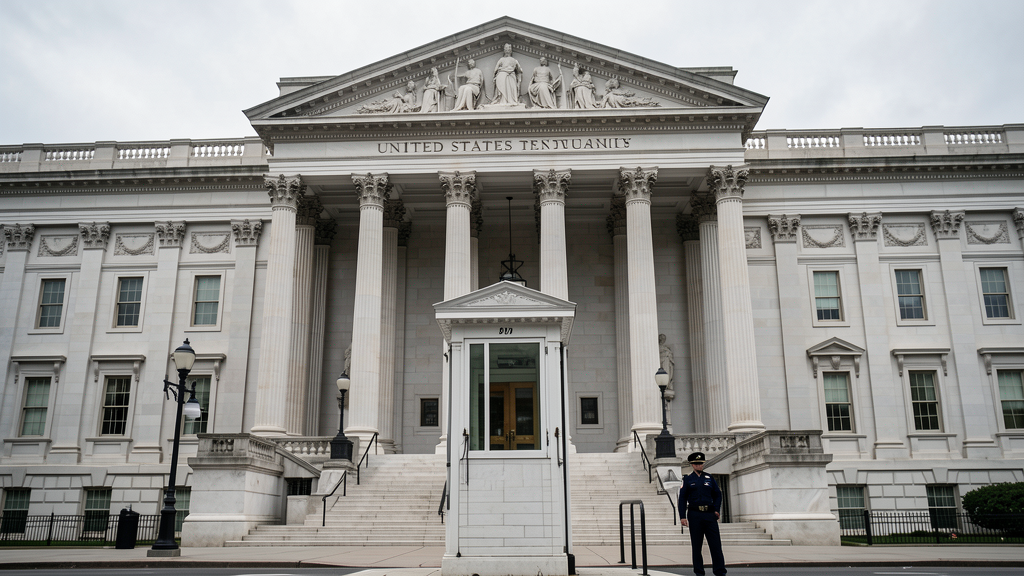
The U.S. Department of the Treasury proposed rules on June 24 that would subject permitted stablecoin issuers to the same anti-money laundering and sanctions requirements that govern traditional banks, with a comment period opening as Congress debates broader market structure legislation.
The joint notice from FinCEN and OFAC, issued in April under the GENIUS Act framework, asks issuers to adopt full Bank Secrecy Act programs: customer identification procedures, suspicious activity reporting for primary-market transactions, sanctions screening, and an independent compliance function reporting to the board. Secondary-market activity—trades between third parties that do not involve the issuer—would be exempt from most reporting obligations.
The Treasury said the rules are designed to block illicit finance without burdening innovation. Yet the operational shift is substantial. Engineering-led stablecoin companies that have built their processes around smart contracts and automated redemption systems must now add traditional financial institution governance, written risk assessments, and designated U.S.-based compliance officers.
A key question is whether the rules survive the comment period intact. Industry groups have begun arguing that the primary-market definition is overbroad and that some obligations duplicate existing state oversight frameworks being drafted under a separate Treasury notice. Banking trade groups, meanwhile, have generally supported the approach, noting that stablecoins are increasingly used in consumer payments and should be subject to comparable safeguards.
For crypto investors, the practical effect is that stablecoin issuance under U.S. law is moving from a regulatory gray area to a formally supervised activity—fast enough that issuers are already adjusting compliance infrastructure. The final rules will likely be adopted in late 2026, with full implementation timed for mid-2027.
Image source: v3b.fal.media