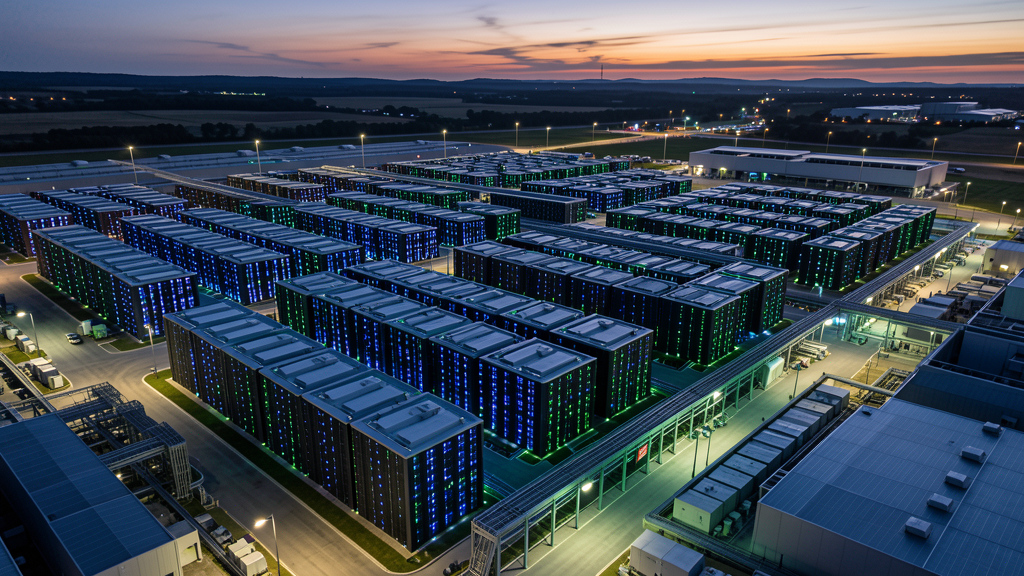
SpaceX signed a deal worth up to $6.3 billion with AI startup Reflection AI to provide GPU compute capacity at its Colossus 2 data center in Memphis, Tennessee.
The agreement announced Monday requires Reflection to pay SpaceX approximately $150 million a month starting July 1 2026 through the end of 2029. The total commitment of roughly $6.3 billion would make it one of the largest single compute contracts ever announced in the AI industry.
Reflection AI will receive immediate access to Nvidia GB300 chips housed inside SpaceX's Colossus 2 facility, a data-processing campus originally built to train xAI's Grok model and repurposed last year as one of the world's largest commercial AI compute platforms. SpaceX has now signed four major external compute tenants with total committed compute revenue from outside clients past $80 billion through 2029.
The deal is a clear marker that compute not just model capability has become the central strategic asset in the global AI race. SpaceX did not build Colossus to rent capacity; it built it to accelerate xAI's internal research. Its transformation into a commercial compute provider gives Elon Musk a new revenue stream alongside the more familiar SpaceX satellite launch business.
Reflection itself is a fast-rising AI lab founded in 2024 by former Google DeepMind researchers Misha Laskin and Ioannis Antonoglou, who previously co-developed AlphaGo. Backed by Nvidia, Sequoia Capital, and Lightspeed Venture Partners at a valuation now approaching $25 billion, Reflection is building frontier-scale AI models under an open-weight release philosophy and has attracted Pentagon and Department of Energy interest.
The deal also exposes a structural tension in the AI supply chain. Nvidia is both chip supplier and a major investor in Reflection, a dynamic described as Nvidia sells the picks and owns part of the mine. Analysts note that Nvidia stands to profit from chip sales to a company it has partially funded while simultaneously competing with Nvidia-backed model developers.
Not all industry reaction has been positive. Google DeepMind engineer Susan Zhang publicly questioned whether Reflection's planned open-weight model release meets the definition of genuine open-source software, given that training data and the full training process remain proprietary. European regulators have separately flagged concentration of AI compute infrastructure in a small number of U.S.-based facilities as a structural risk for the global AI ecosystem.
Demand for high-end GPU capacity has begun to outstrip supply with reservations for training slots at major data centers extending beyond 2027. If Reflection can execute on its technical vision — building a frontier model with open-weight licensing while operating at $150 million a month inside SpaceX's compute infrastructure — the deal becomes a landmark in how the AI industry organizes compute capital and development. If it misses its milestones investors will have to reconsider what a $25 billion valuation for an unproven AI lab actually means.
Image source: v3b.fal.media