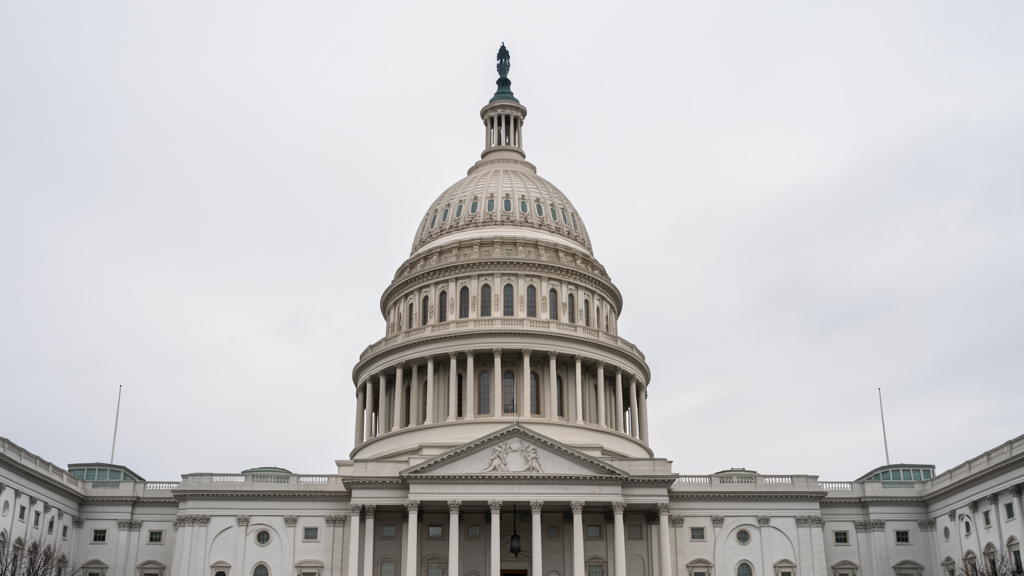
The Office of the Comptroller of the Currency published a request for comments on its proposed implementation of the GENIUS Act, the landmark federal stablecoin law signed by President Trump in July 2025.
The notice of proposed rulemaking, issued in March and now open for stakeholder feedback, outlines the regulatory requirements that would govern how payment stablecoins can be issued and operated in the United States. At the center of the framework is a new entity classification: the Permitted Payment Stablecoin Issuer, or PPSI. The rules would require issuers with more than $10 billion in outstanding stablecoin supply to hold a federal OCC charter with heightened capital, reserve, and governance standards. Smaller issuers operating below that threshold would be permitted to use alternative state-level regulatory regimes.
The timing is significant. The GENIUS Act sets an effective implementation date of July 18, 2026 — roughly one month away. The OCC's comment period, which closes in the coming weeks, represents the last meaningful opportunity for industry participants to shape the final rule structure before it takes effect. A final rule issued on time would give stablecoin issuers, banks, and institutional clients a clear legal framework for the first time since the industry's earliest days.
The proposed rules clarify that payment stablecoins are neither securities nor commodities under the federal statutes that govern those asset classes — a definitional decision that removes one of the regulatory ambiguities that has slowed institutional adoption of stablecoin-based payment systems. The OCC would also gain formal enforcement authority including cease-and-desist powers and the ability to impose civil money penalties against non-compliant issuers.
Banking industry reaction has been cautiously supportive. The American Bankers Association and several large regional banks filed comments in May noting that the OCC's approach appropriately balances consumer protection with innovation, though some argued that the $10 billion threshold is too low and would effectively force mid-sized stablecoin projects into a federal regime that may be disproportionately costly to comply with. Smaller fintech operators raised the opposite concern: that the rules would create a two-tier system favoring large incumbents.
The crypto industry's response has been more positive. The GENIUS Act's passage in 2025 was the first major federal legislative victory for the digital asset sector, arriving after a period of aggressive SEC enforcement under the prior administration. Stablecoin issuers including Circle have publicly called for rapid finalization of the OCC rules, arguing that regulatory clarity is the primary remaining barrier to widespread institutional deployment of stablecoin-based payment and settlement infrastructure.
The practical implications extend well beyond the stablecoin issuers themselves. Payment processors, merchant networks, and treasury management platforms have all been waiting for a federal framework before committing capital to stablecoin-integrated products. A July implementation date means that the first stablecoin transactions under the new regime could begin operating under formal OCC oversight within weeks.
There is one open risk: the OCC proposed its rules in March and the GENIUS Act's effective date is July 18, 2026. If the comment period produces extensive industry pushback, the final rule could be delayed or materially revised, creating regulatory uncertainty precisely at the moment the industry was hoping for clarity. For now, stablecoin issuance sits in a liminal space — subject to a federal law's requirements but governed only by a proposed rule whose final form has not yet been written.
Image source: v3b.fal.media