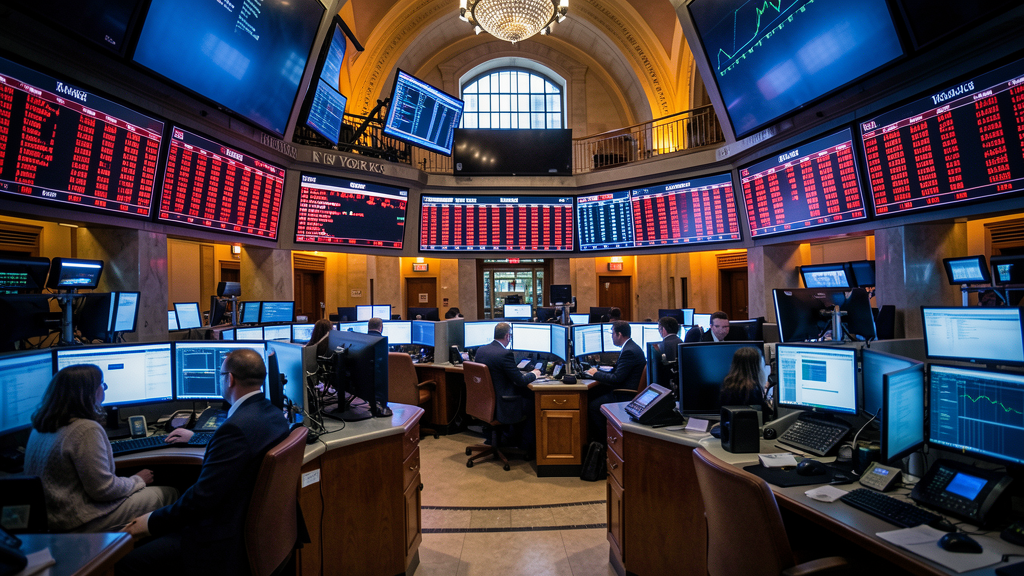
U.S. stocks fell broadly on June 10 after fresh inflation data showed annual consumer prices climbing to 4.2 percent in May, the fastest pace in three years, as investors reassessed the outlook for Federal Reserve policy and the path of equity valuations into the second half of 2026.
The S&P 500 closed down 1.62 percent at 7,266.99. The Nasdaq Composite fell roughly 2 percent, extending a losing streak in large-cap technology names that has defined the first half of June. The Russell 2000, tracking small-cap stocks, managed a rare gain of 0.4 percent — an inversion of the large-cap leadership that has dominated most of 2026 and a shift worth watching.
The market's reaction needs careful parsing, because the underlying CPI is not uniformly alarming. Headline inflation rose 0.5 percent month-over-month, and on the year, the 4.2 percent rate is the highest since April 2023. Core inflation — which strips out food and energy — rose just 0.2 percent monthly and 2.9 percent annually, in line with consensus and well below the headline figure. The gap between the two readings, roughly 130 basis points, is unusually wide and has defined the day's narrative.
Energy accounted for more than 60 percent of the total monthly increase. The price impulse is tied directly to the ongoing U.S.-Iran military conflict over the Strait of Hormuz, which has kept a structural risk premium in crude prices. WTI crude traded around $88 per barrel after falling 3.6 percent in the session, and Brent eased to around $91, down from above $95 earlier in the conflict. OPEC+ also approved an additional 188,000 barrels per day of July output quotas, helping absorb some of the supply anxiety.
What matters for equities is what happens next, not what happened today. Analysts at Investing.com framed the divergence well: if energy prices cool — either through diplomacy or additional OPEC+ supply — then the inflation spike is viewed as largely transient and equity multiples can re-expand. If energy remains elevated long enough to bleed into services and wages, then the core CPI will begin climbing and the inflation problem becomes structural. The currency of that debate is Treasury yields and Fed expectations.
The afternoon session reflected divided interpretation. Treasury yields barely moved after the 8:30 a.m. ET CPI release, and equity futures pared losses after the initial read. Traders absorbed a hot headline with a soft core, treated goods inflation as benign, and assigned higher probability to a contained energy story. But the session still ended red, reflecting the reality that even a benign interpretation of bad news leaves room for worse outcomes if the underlying data does not improve.
Technology stocks bore the brunt. Nvidia, Broadcom, and Micron all declined. Micron remains under pressure after a 20 percent two-day collapse late last week, including a 13 percent single-day rout. Super Micro Computer dropped roughly 12 percent to around $34.66 after announcing approximately $7 billion in equity financing. The semiconductor group has been in a violent correction after a parabolic 2026 rally: the iShares Semiconductor ETF fell 1 percent on the CPI session after a 6 percent rebound on Monday, a two-way churn that signals a sector still struggling to find equilibrium.
For investors, the bind is simple. Earnings remain solid, dividend yields are attractive, and corporate balance sheets are in better shape than they were a year ago. But inflation at 4.2 percent and a Fed that has shifted from "cutting soon" to "possibly hiking by December" compresses the multiple investors are willing to pay for future growth. The equity market is not broken. It is being repriced, and the new price is still being discovered.
Image source: v3b.fal.media