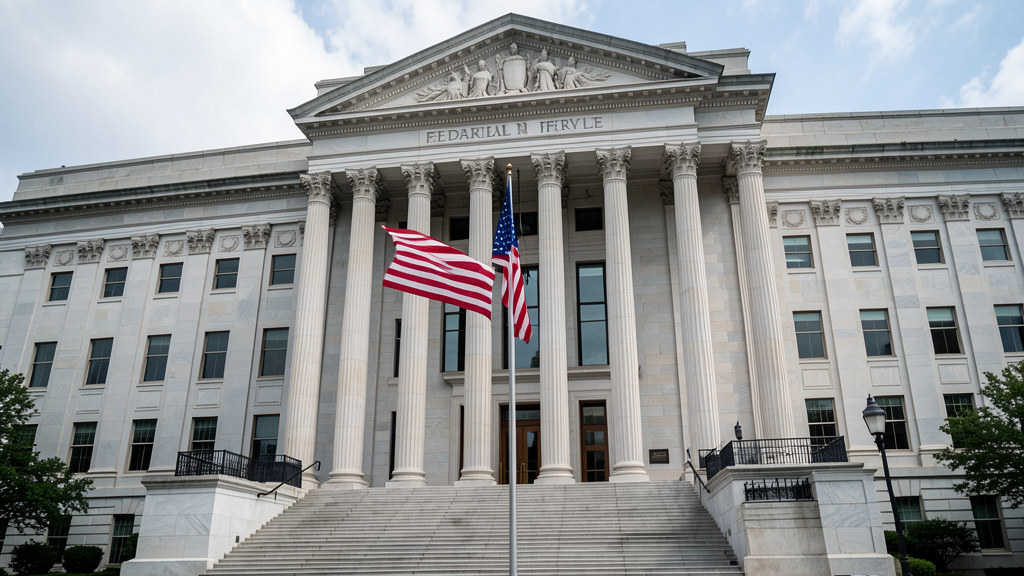
When the Federal Reserve releases its 2026 bank stress test results at 4 p.m. ET on Wednesday, the headline will almost certainly show that all 32 participating large banks pass the hypothetical recession scenario.
That outcome is expected by analysts at JPMorgan, Bank of America, and Fed officials themselves. The test subjects banks to a severe global recession, 10% peak unemployment, and sharp commercial real estate price declines. Capital plans were frozen until 2027, and the scenarios largely reuse prior-year models, reducing the chance of a surprise failure.
The more pointed discussion is happening outside the Fed’s report. In a June 9 analysis, AInvest noted that banks’ direct outstanding exposure to AI-adjacent industries averages just 0.8% of total balance sheets, a figure that looks reassuring but excludes exposure routed through nonbank financial institutions. The BIS reported in March that AI infrastructure—primarily data centers—is now funded substantially through private credit channels outside the Fed’s regulatory perimeter.
Critics argue that as major banks lend to private credit firms, which in turn finance data center developers, the stress test captures only the first leg of that credit chain. The riskier downstream exposure—the NBFI-to-data-center piece—remains invisible to the test.
‘The stress test will confirm what everyone expects: that regulated banks are well-capitalized,’ an industry analyst wrote in early June. ‘The implication for AI infrastructure investors is that the real question isn’t whether the banks pass. It’s whether the unregulated credit supporting their customers’ buildout plans can survive when the hypothetical scenario the Fed models turns out to be less hypothetical than expected.’
The Fed’s framework measures what it can measure. The financial plumbing around AI data centers is, by design, moving where it cannot.
Image source: v3b.fal.media