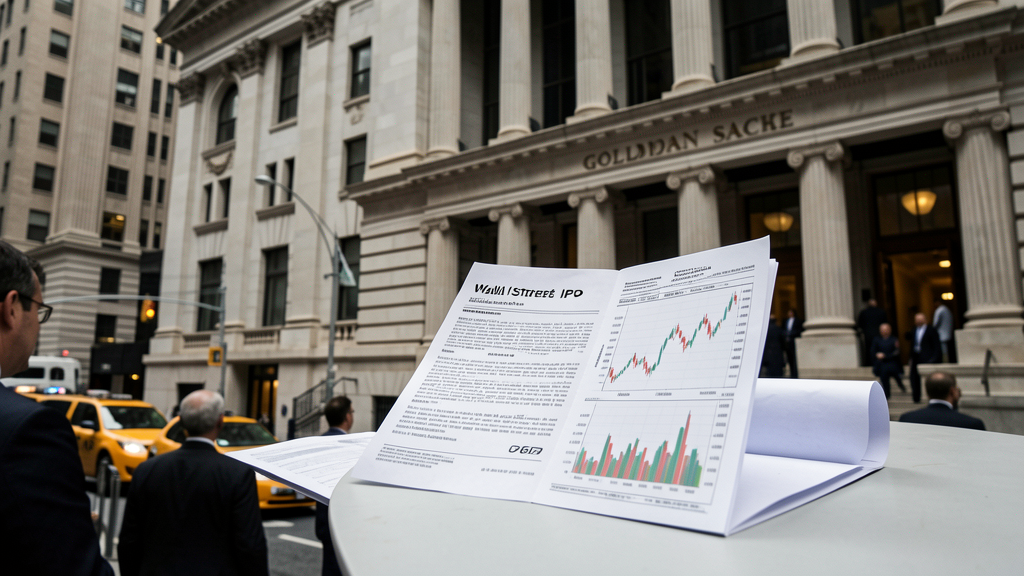
Anthropic, the fast-growing artificial intelligence company behind the Claude chatbot, confidentially submitted a draft IPO prospectus to the Securities and Exchange Commission on June 1, joining what is shaping up to be the most consequential wave of AI company listings in market history.
The filing puts the four-year-old company on track for a public debut at a valuation of roughly $965 billion, following a $65 billion funding round that closed just days before the submission. At that level, Anthropic would rank among the most valuable publicly traded companies in the world before it sells a single share to the public—and would eclipse the valuation of established players such as Nvidia at the time of its 1999 listing or Meta's 2012 debut.
The numbers are staggering in historical context. Anthropic's annualized revenue run rate reached $47 billion as of May 2026, up from roughly $10 billion for full-year 2025—a growth rate that few technology companies in any era have sustained. The $965 billion implied valuation represents a roughly 20-times revenue multiple, a steep premium that investors have in practice been willing to pay for companies they believe will dominate the coming generation of software infrastructure.
But Anthropic is not the only AI giant preparing to go public. Elon Musk's SpaceX, which merged with his xAI venture earlier this year at a combined valuation of $1.25 trillion, already filed a public prospectus in May and is targeting a debut this month that could raise as much as $75 billion—which would shatter Saudi Aramco's 2019 record for the largest initial public offering in history. OpenAI, Anthropic's chief rival, is preparing its own confidential filing while its valuation sits around $852 billion. Taken together, the three listings could bring more than $150 billion in fresh capital to market in 2026.
The concentration of value around a small handful of privately held AI companies has prompted some analysts to warn of a potential bubble—or at least a historically risky moment for investors who buy into the initial wave. Oracle, an established technology stock, posted its worst weekly performance since the 2001 dot-com bust in late May on concerns about escalating AI infrastructure costs. The AI semiconductor index has been similarly volatile: it erased roughly $1.4 trillion in market value during a single June session before recovering, underscoring how quickly sentiment in the sector can shift.
Anthropic's own path to the markets has not been without turbulence. Earlier in 2026, the Pentagon placed an administrative blacklist on several of its models after contract negotiations collapsed, briefly cutting off the company from federal contracts. The company filed litigation in response, and President Trump has since stated publicly that a resolution is possible. On the commercial side, the damage was limited: the Claude app reached number one on Apple's free-app charts in February and has maintained strong consumer momentum since.
What remains unresolved is how Anthropic's public market valuation will square with its relationship to the U.S. government more broadly. The company is in active talks with senior administration officials about prospects for a separate model developed under a program called Project Glasswing. Whether regulators will treat Anthropic as a partner, a competitor, or something in between is a question the market will have to price alongside the company's financials.
Confidential filings do not require companies to commit to a specific debut date or price range before releasing their public prospectus. Anthropic's statement was carefully measured: the filing provides "the option to go public after the SEC completes its review," subject to market conditions and other factors. For observers watching the sector, the message is clear—the most anticipated IPO cycle since the dot-com era is now genuinely in motion, and its timing will depend as much on Washington as on Wall Street.
Image source: v3b.fal.media