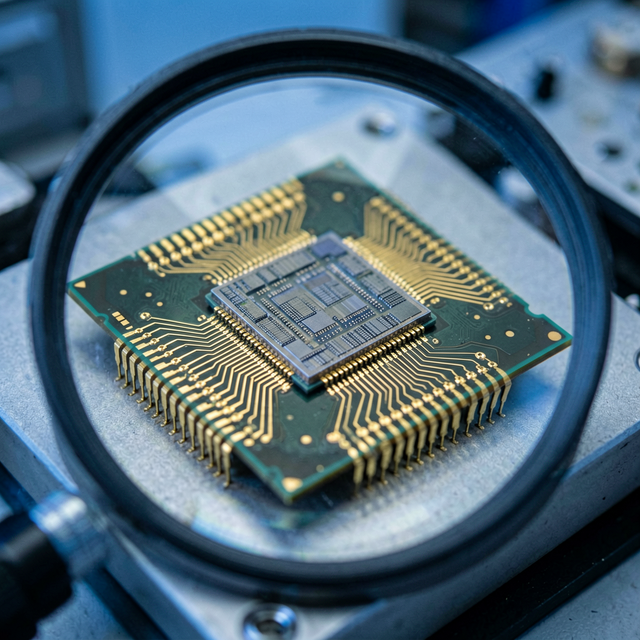
OpenAI has joined the custom silicon race, unveiling a new AI accelerator co-designed with Broadcom that promises to slash inference costs and reduce reliance on Nvidia's dominance.
The chip, dubbed Jalapeño, marks a significant strategic pivot for OpenAI as it seeks greater control over the hardware layer powering ChatGPT and its enterprise AI services. Broadcom, already a key partner for Google's Tensor Processing Units, provided the semiconductor design expertise while OpenAI contributed architectural specifications tailored to its large language model workloads.
Industry analysts say the move reflects growing tension between AI labs and their chip suppliers. With Nvidia controlling an estimated 80% of the AI accelerator market, customers have complained about pricing power and allocation constraints. OpenAI's custom chip is expected to handle inference — the process of running trained models — rather than training, which remains the most computationally intensive phase.
Broadcom shares rose modestly in after-hours trading following the announcement. The companies did not disclose manufacturing partners, but Taiwan Semiconductor Manufacturing Company is widely expected to produce the chips using its advanced 3-nanometer process.
The announcement places OpenAI in the company of Amazon, Google, and Microsoft, all of which have developed or commissioned custom AI chips. Whether Jalapeño can match the performance of Nvidia's latest Blackwell generation remains an open question that will shape competitive dynamics in the AI infrastructure market through 2027.
Image source: i.ibb.co