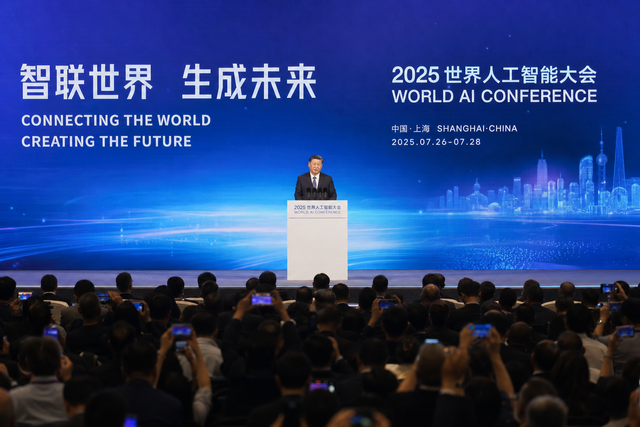
President Xi Jinping is expected to deliver a keynote address at the opening of the World Artificial Intelligence Conference in Shanghai on Friday, outlining China's vision for global AI governance as the gathering convenes some of the field's most consequential voices.
The conference, running July 17–20, arrives as international efforts to coordinate on AI accelerate. In recent days, 29 countries signed an agreement to establish a global AI cooperation body, a signal that Beijing is seeking a seat at the center of emerging rule-making rather than remaining outside it.
China's posture reflects both ambition and necessity. Domestic labs have produced competitive open models now deployed inside U.S. firms, while the government has framed AI as a strategic priority comparable to past industrial revolutions. A keynote from the country's top leader elevates the forum's diplomatic weight.
Governance is the fault line. The United States, Europe and China hold divergent views on safety, openness and state control, and any durable framework will require bridging gaps that have widened over export controls and military applications. The new cooperation body is an early, tentative step.
For attendees, the event is also a showcase of applied technology — robotics, autonomous systems and enterprise tools — set against a backdrop of intensifying rivalry with Washington. Chinese firms are using the stage to court partners across the Global South.
The coming days will test whether lofty statements translate into mechanism. Xi's remarks will be parsed for signals on China's willingness to bind itself to international norms, even as it races to lead the next wave of intelligent machines.
Image source: i.ibb.co