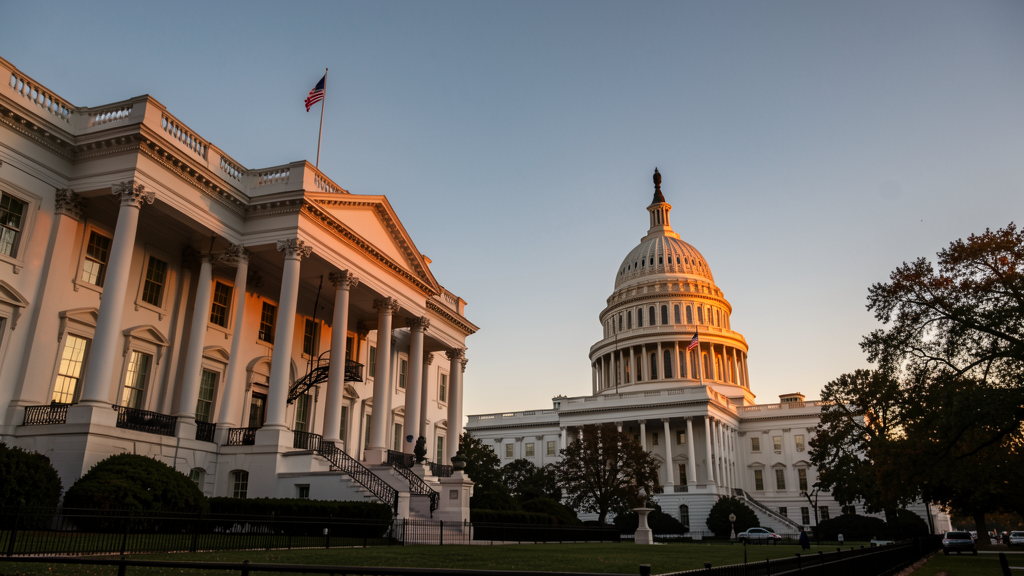
Federal agencies have five days left to deliver compliance frameworks under Trump's AI Executive Order 14409 — and the obligations extend well beyond paperwork, with direct consequences for the companies building frontier AI systems.
When President Trump signed Executive Order 14409 on June 2, the directive was framed as a cybersecurity and national security measure. The operative deadline is July 2 — one month from signing — by which time relevant federal agencies must deliver new or updated frameworks covering government access to frontier models, vulnerability reporting channels, and minimum security standards for advanced AI systems.
An AI system qualifies as "frontier" under the order when it exceeds compute thresholds that will be formally defined by the White House Office of Science and Technology Policy. Within that definition sit the most powerful language and multimodal models currently in commercial and research use — including the latest generations from Anthropic, OpenAI, and Google. Any model that crosses the threshold and does business with the US government, directly or through contractors, must now satisfy a set of security conditions that did not exist as formal federal requirements before June.
The compliance target is not only American companies. Foreign AI labs that provide services to US government agencies or hold federal contracts are explicitly in scope. The order directs the National Security Agency and CISA to establish vulnerability disclosure requirements for frontier models and to provide guidance on safe government use — a process with an interim reporting milestone on July 2 and a further public-comment period expected by year-end.
What makes the moment consequential is timing. The EU AI Act entered full application in August 2025; by mid-2026 its rules on high-risk AI systems are becoming the reference point for global regulators. The US executive order deliberately avoids mandatory licensing or forced model disclosure — positions that some civil society groups had advocated and that the EU framework effectively mandates for certain categories. But the voluntary-security-framework model it proposes still places concrete obligations on AI labs that want to work with the federal government.
In practice, that means AI companies must now operate under two overlapping regimes: the EU's product-classification rules for anything sold into European markets, and Washington's access-and-vulnerability framework for any US government interaction. The July 2 milestone matters because the agency reports feeding into it will shape the specifics — including whether frontier models eventually require formal security audits or whether self-certification remains the path of least resistance.
The December review, which the order mandates, is the real inflection point. That review will determine whether the US embraces more prescriptive frontier model oversight or retreats to the current lighter framework. For AI labs, the practical imperative is to prepare for both outcomes. July 2 is the opening bell, not the final round.
Image source: v3b.fal.media